
Tech
World Edition
Neutrinos Came From Deep Space, Nobel Landed in Belgium, Francis Halzen Cosmic Win !
Francis Halzen Nobel winning work highlight the discovery of high energy neutrinos originating from astrophysical sources, marking a significant contribution to our understanding of the universe.…
CMS Admin
Editorial · Honestly Biased
AI Narrative Bias Audit
he story is largely science focused and fact driven with minimal ideological or political bias, though phrases such as groundbreaking or cosmic breakthrough could add a celebratory tone to the coverage.
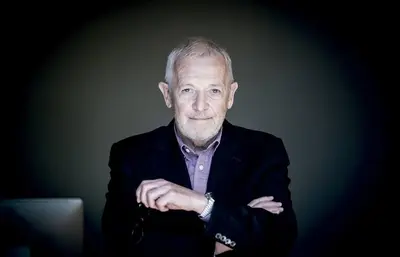
Belgian particle physicist Francis Halzen has been awarded the 2026 Nobel Prize in Physics for his decisive contribution to the Ice Cube Neutrino Observatory and the discovery of high energy neutrinos originating from astrophysical sources.
The Nobel Prize in Physics was announced on Tuesday by the Royal Swedish Academy of Sciences in Stockholm. The committee recognised Halzen work in developing Ice Cube, a major scientific facility designed to detect elusive neutrinos arriving from deep space.
According to the Nobel Committee, the Ice Cube Neutrino Observatory, conceived by Halzen, continuously tracks neutrinos originating from the distant cosmos. These particles are extremely difficult to detect because they interact only weakly with matter, allowing them to travel across vast cosmic distance largely undisturbed.
The committee said that the neutrino interactions recorded by Ice Cube could provide researchers with new insights into the violent environments where high energy neutrinos are produced. The observations could also help scientists identify previously unknown cosmic phenomena.
Halzen work has helped establish neutrinos as an important tool for studying some of the most energetic and mysterious events in the universe. Rather than relying solely on conventional light based observation, scientists can use neutrinos to investigate cosmic environments that may otherwise remain difficult to observe.
The 2026 Nobel Prize in Physics carries a total prize amount of 12 million Swedish kronor, equivalent to approximately $1.2 million. The prize money is divided if more than one laureate is selected in a given year.
The award also follows the 2025 Nobel Prize in Physics, which was awarded to John Clarke, Michel Devoret and John Martinis for experiment demonstrating macroscopic quantum mechanical effects in electrical circuits.
Halzen recognition places neutrino astronomy at the centre of this year Nobel spotlight, highlighting how particles that are almost impossible to detect can nevertheless provide scientists with a powerful window into the most extreme corner of the universe.
Distribute This Chronicle
Independent commentary breaks corporate silence when readers circulate the ledger directly to their peers.
Attribution: Editorial
Examine Raw Source