Tech
World Edition
Pope Tells Humanity, Use AI, But Don’t Let the Robots Steal Your Soul
The Pope warning highlight concern that growing reliance on AI could weaken human judgment, empathy and social connection. The issue reflect a broader debate over how AI should be developed and used…
CMS Admin
Editorial · Honestly Biased
AI Narrative Bias Audit
The headline frames AI primarily as a potential threat to human values, emphasising the Pope warning while leaving less room for AI potential benefit and broader perspective on the technology.
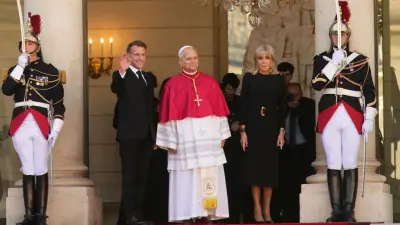
Pope Leo XIV has warned about the growing influence of artificial intelligence (AI), cautioning that humanity must not lose its sense of identity and values while embracing increasingly powerful machines.
Speaking at the Elysee Palace at the start of his four day visit to France, Leo urged people to avoid what he described as losing our humanity amid a paradise of machine. His remark came after an hour long meeting with French President Emmanuel Macron.
The Pope has previously raised concerns about AI and its impact on society. In May, he called for artificial intelligence to be disarmed in the first major teaching document of his papacy, drawing parallels between modern technological exploitation and historical forms of human exploitation.
AI and the Question of Human Values
Leo latest comment add to a growing international debate about how artificial intelligence should be developed and used.
The rapid expansion of AI has brought potential benefits across areas such as education, healthcare, research and industry, while also raising questions about employment, privacy, misinformation, accountability and the role of human decision making.
The Pope intervention places particular emphasis on the ethical dimension of the technology, arguing that technological progress should not come at the expense of human dignity and responsibility.
A Major Visit to France
The Pope AI warning was delivered during a wider four day visit to France that includes meeting with political leaders, young people, migrants and victims of sexual abuse by members of the Catholic clergy.
Leo was welcomed at Orly airport by Macron on Friday. The pair later held talks at the Elysee Palace, with the Pope also scheduled to address crowds in Paris and Metz.
A major Mass is expected to draw more than half a million people to Paris on Saturday. An altar has been constructed at the Place de la Concorde, while security measures have been put in place around the Champs Elysees.
The Pope is also due to travel through Paris in the popemobile and meet around 80,000 young people at the Stade de France.
On Sunday, around 150,000 people have registered to attend Mass at the sanctuary of Lourdes.
Pope Raises Secularism Debate
Leo visit has also brought France long running debate over religion and secularism into focus.
Speaking at the Elysee Palace, he argued that authentic secularity should not mean excluding religion from public life or education.
France maintains a strict separation between the state and religion, a principle that has influenced legislation concerning religious symbols in public institutions and schools.
Macron, meanwhile, described the Pope visit as a great honour and said French secularism does not negate religion.
The president is not expected to attend any of the Pope Masses, in keeping with France approach to the separation of church and state.
Political Figures Expected at Mass
Macron wife, Brigitte Macron, and Prime Minister Sebastien Lecornu are expected to attend the Paris Mass.
Several prominent political figures are also due to be present, including Marine Le Pen, Edouard Philippe, Gabriel Attal and Bruno Retailleau.
Reports of tensions between Macron's team and the Vatican over arrangements for the visit were dismissed by Elysee officials, who said the Pope had been offered a number of ceremonial option but was not expected to accept all of them.
The Vatican team also declined a proposed meeting between Leo and artisans involved in the reconstruction of Notre Dame cathedral, with officials citing the Pope's tightly scheduled itinerary.
From Notre Dame to Lourdes
The Pope itinerary includes several religious and social engagements.
In Paris, he will meet young people and migrants before travelling to Lourdes, where he is also scheduled to meet victims of sexual abuse by Catholic clergy.
His visit will conclude with a trip to Metz on Monday, where he is expected to pay tribute to Robert Schuman, one of the founding figures of the European Union and a Catholic figure being considered for beatification.
France Changing Religious Landscape
The visit comes against the backdrop of France long and complicated relationship with Catholicism.
France was historically known as the Eldest Daughter of the Church, although the description is based on a historical tradition rather than the country being the first to adopt Christianity.
The papacy was based in Avignon during the 14th Century, while French rulers later played significant roles in European and Church politics. Napoleon also famously held two popes captive.
Modern France, however, has undergone significant secularisation. Fewer people identify as Catholic and regular religious participation has declined substantially compared with previous generation.
At the same time, recent years have seen signs of renewed interest in religious traditions, including a rise in the number of adults receiving Catholic baptism.
Cardinal François Bustillo, Bishop of Ajaccio, described this development as evidence of people searching for meaning and values in an increasingly secular society.
The Larger AI Question
Leo warning places the debate over artificial intelligence within a much broader question, how far should technological progress go before society begins to reconsider what it means to remain human?
As AI becomes increasingly integrated into everyday life, the discussion is no longer limited to what machines can accomplish. It also involve questions about human responsibility, ethics, dignity and whether technological convenience should come at the cost of human judgment and connection.
For Pope Leo XIV, the challenge is not simply to control machines, but to ensure that humans remain at the centre of the technological future.
Distribute This Chronicle
Independent commentary breaks corporate silence when readers circulate the ledger directly to their peers.
Attribution: Editorial
Examine Raw Source